Exercitation ullamco laboris nis aliquip sed conseqrure dolorn repreh deris ptate velit ecepteur duis.

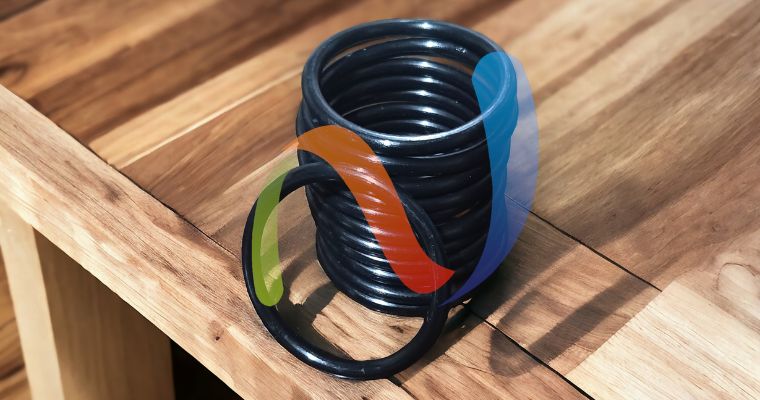
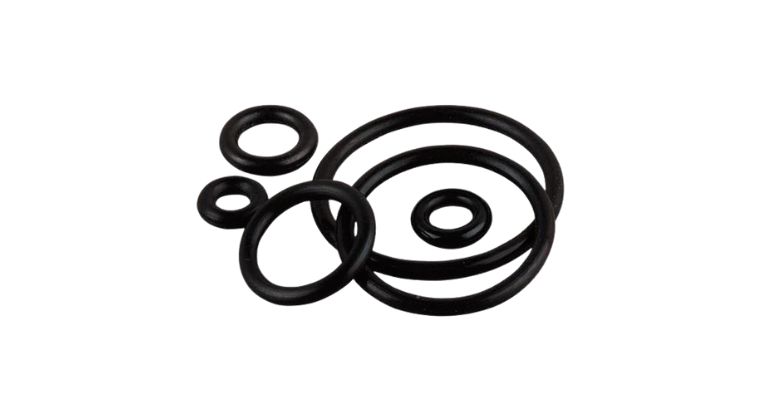
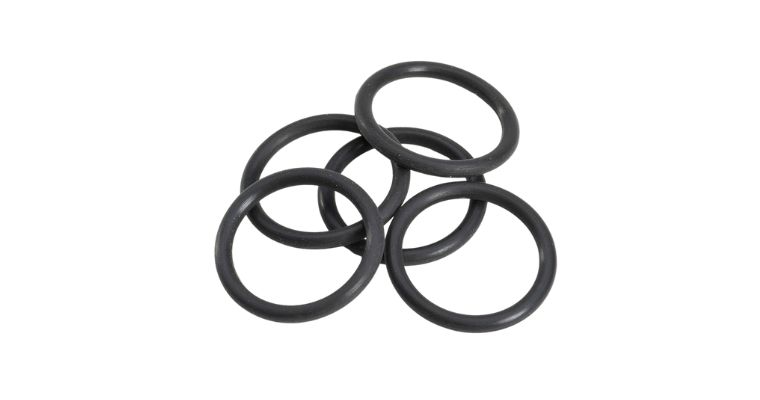
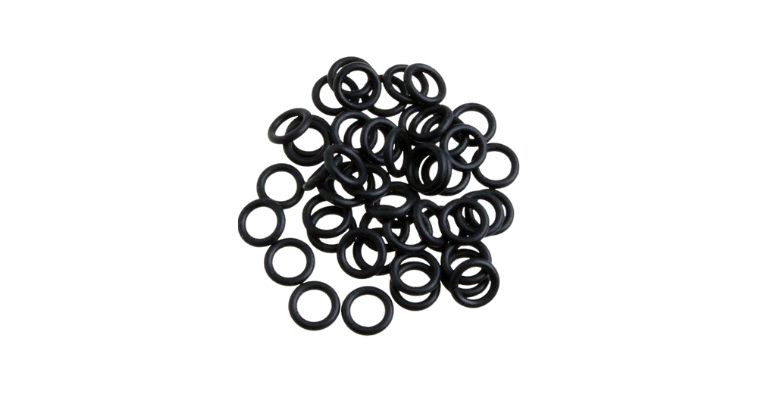
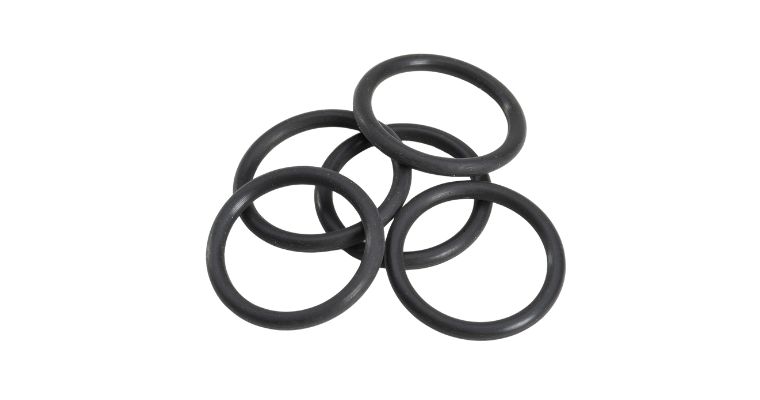
Namrata Rubber Product Pvt. Ltd is one of the leading O-ring and precision-engineered rubber components manufacturers, designed to meet the requirements of the hydraulic industry in Johannesburg, the marine industry in Cape Town, the chemical industry in Durban, and the pharmaceutical industry in Pretoria. O-rings are precision-engineered rubber components that require a dimensional tolerance of ±0.1 mm and an inner diameter of 3 to 500 mm. O-rings are manufactured using a compression moulding technique by the suppliers.
The O-rings produced by Namrata Rubber Product Pvt. Ltd are resistant to harsh conditions and are made from a variety of specially formulated materials. These include ASTM D2000-approved nitrile rubber for oil-based environments, excellent resistance to chemicals like viton and can be used up to +200°C, high temperature rating up to +140°C for EPDM, and high temperature rating up to +300°C for silicon. In addition to this, VMQ is particularly used in areas that require steam sterilization.
The O-rings produced by Namrata Rubber Product Pvt. Ltd are made to ensure that at least 95% of the gland is filled after installation, and are made to ensure that the pressure-induced extrusion is kept to a minimum. In addition to this, the O rings produced by Namrata can be made to accommodate any style of grooves that are not considered standard.
For buyers in Africa, we can provide F.O.B. In addition to this, all our exports can be made available through the FOB service and can be easily imported by the buyers. In addition to this, we will also be able to provide test reports, origin certificates, and RoHS reports along with all our exports.
The working of industrial sealing rings is that they are able to compress and mold themselves to small irregularities between two surfaces. It is this flexibility that enables these rings to create a narrow barrier that prevents any fluids and gases from escaping. In a well-designed system, the rate at which leakage occurs is extremely low – 106 cc/sec – as stated in the Parker O-Ring Handbook. However, for these sealing rings to be able to seal properly, they are compressed between a certain range, between 10 and 40 percent of their space.
It is this compression that enables these rings to create a force that can suppress internal pressure; this is made possible by their ability to expand laterally, a property that is explained by Poisson's ratio. The o-ring sealing system is vital in ensuring that the machines run smoothly. They are used to retain lubrication in the bearings, hydraulic fluids, and process fluids in the valves and pipelines.
In addition, without proper sealing, even small leaks may lead to performance degradation or equipment damage over a period of time. The selection of materials is, in turn, mainly dependent on the environment in which the seal is used.
For instance, Viton is suitable for chemical exposure and high temperatures, ranging from -20 degrees C to 200 degrees C. EPDM is used in steam and water systems. Silicone is used in dry heat at high temperatures. Nitrile (NBR) is used in oil and petroleum fuels.
Reliable sealing performance is ensured through high-quality O-rings with well-engineered materials that ensure performance under compression.
High Tensile Strength
Premium materials used in O-rings have a minimum tensile strength of 15 MPa as per ASTM D412. This provides O-rings with sufficient strength to resist pressures of up to 100 bar and prevent extrusion into clearance gaps. O-rings also prevent splitting and tearing of the ring when stretched during installation.
Temperature Resistance
The design of an O-ring is such that it is able to work effectively over a wide range of temperatures. This range is between -50 degrees Celsius and +250 degrees Celsius, depending on the elastomers used. The aim is to ensure that it does not harden or lose elasticity within its range.
Chemical Resistance
O-rings are also meant to withstand exposure to petroleum-based oils, synthetic lubricants, and water-based cleaning solutions without suffering any form of damage. This ensures that any unwanted chemical reactions are prevented from taking place. When an O-ring is exposed to harsh chemicals, it may swell and eventually fail.
Properties of elasticity and flexibility.
O-rings are also preferred because they have high elasticity and flexibility. The material used has a hardness that ranges between 50 to 90 Shore A, with a compression deflection that ranges between 20% to 40%. A high-quality O-ring is also one that can return to its original form up to 95% after being subjected to constant pressure for a period of approximately 70 hours.
Extended Service Duration
One advantage associated with O-rings is that they have a long lifespan. The compression set is normally determined using a test referred to as the compression set test. High-quality O-rings have been observed to meet the requirements during the test, with a compression set of less than 25% after being subjected to a test at 70°C for a period of 22 hours, according to ASTM D395 specifications.
Namrata Rubber Product Pvt. Ltd is a reputed company that manufactures rubber O-rings that provide different kinds of sealing solutions for various uses in the industry. The company offers both standard and customized O-rings that are made of silicone, EPDM, nitrile, neoprene, Viton, etc., which are capable of working well in different temperature, pressure, and chemical conditions.
Besides the design, the selection of the O-rings also depends on the requirements of the applications, i.e., the medium, temperature, elasticity, etc., that are to be filled by the O-rings. The aforementioned O-rings are manufactured through a precise molding process that allows the O-rings to be applicable in both static and dynamic conditions. These O-rings are extremely popular for use in automobile parts, fluid handling equipment, food processing equipment, industrial machinery, etc.
Silicone rubber O-rings are the choice for applications where flexibility, hygiene, and temperature resistance are of high priority. Silicone is also inert by nature, which is why food-grade silicone seals and medical-grade silicone O-rings are used. It does not emit any toxic substances, which is why this material is widely used for food processing and medical devices.
Besides that, high-temperature O-rings can work under very harsh conditions, as their usual temperature range is from -60 °C to +250 °C, which will vary depending on the compound. The test method for rubber - ASTM D1418 provides the definitions and classifications for the type of rubber parts discussed here.
General-purpose rubber O-rings are employed for general industrial use when average performance is required. Industrial use of general-purpose O-rings is usually based on compounds such as natural rubber and SBR, which are suitable for general strength and flexibility. They are suitable for use up to about 80 degrees Celsius.
General-purpose rubber O-rings are usually employed for pipe sealing rings, machine sealing rings, heavy-duty rubber seals, etc., when cost-effectiveness is of primary importance, but at the same time, there is no compromise in their performance.
Applications
Key Benefits
O-Ring is used for EPDM rubber, which is used for applications that are exposed to weather, water, and ozone. Weather-resistant O-Ring is known for its durability in the outdoors.
The specifications follow ASTM D2000 standards as O-Ring has a great resistance to ozone and UV degradation. O-Ring is used for applications in sealing rings for HVAC systems, water-resistant O-Ring, and HVAC sealing rings, which are used between -40°C and 150°C. It is used for applications where steam and water are involved.
Applications:
Key Benefits:
Neoprene rubber O-rings are important because they have a balanced resistance to oils, chemicals, and environmental conditions. Polychloroprene oil resistant O-rings are used in industrial and marine environments.
They are used in a temperature range of minus 30 degrees Celsius to 120 degrees Celsius and are used for marine sealing rings, as well as for making chemical-resistant rubber seals.
Applications:
Benefits:
Nitrile rubber O-rings (NBR) are widely used where resistance to petroleum-based fluids is a requirement. Fuel-resistant O-rings are often used in automotive and hydraulic systems. Nitrile, according to ASTM D471 , exhibits controlled swelling after being exposed to oils; therefore, it is a reliable material for use in sealing processes.
They function between -40 degrees Celsius and 120 degrees Celsius and are used for hydraulic sealing rings, oil-resistant rubber seals, and pneumatic sealing rings.
Applications:
Key Benefits:
Viton rubber O-rings are used in harsh environments where high temperatures and severe chemicals are encountered. These O-rings are made of fluoroelastomers (FKM) materials, which are used for making chemical-resistant O-rings that can operate continuously in temperatures up to 200 degrees Celsius.
They are used in making industrial chemical seals, aerospace seals, and high-temperature seals, as they have a low compression set, as defined in ASTM D395.
Applications:
Key Benefits:
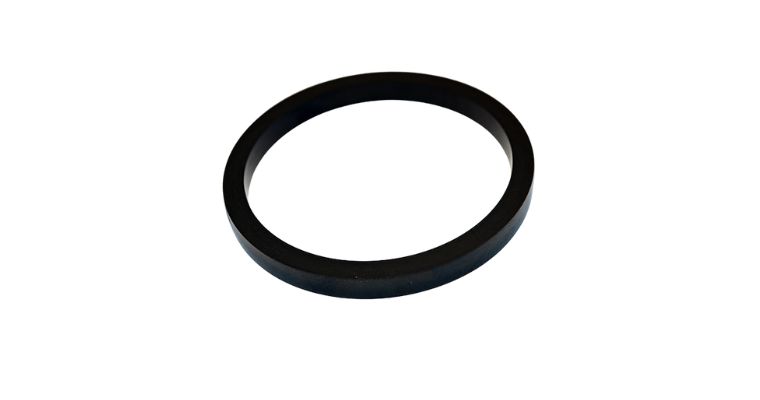
The square-shaped rubber rings are capable of sealing more effectively than the circular-shaped O-rings, owing to their larger surface area, which is capable of creating a more secure seal when both of these hydraulic seals are used in combination.
The square-shaped rubber rings are capable of providing a flat surface, which is why they are more capable of resisting extremely high pressure. These things are also capable of being applied in different hydraulic systems, as well as different valve systems, especially when it comes to resisting extrusion, which is a critical factor for ensuring the proper performance of a component.
Applications:
Key Benefits:
Custom-developed o-rings made of rubber find their use in situations where special dimensions, materials, and/or performance criteria need to be satisfied. Custom seals made of rubber are developed based on special requirements of operation.
Standard O-rings may not be suitable for use in industries where special performance is required.
Application:
Key Benefits:
O-rings made of rubber have various uses in different industries for making seals for both stationary and moving equipment or parts. The O-ring seal is created when the O-ring is compressed into the groove. Therefore, for the O-ring to function well, it must be made up of a rubber material that is able to withstand different fluids and temperatures. Also, it should be the right size so that it fits well in the groove.
Nitrile (NBR) O-rings are used for making seals in automotive fuel injection systems that have high-pressure components. The O-rings are meant for use in extremely high-pressure environments up to 100 bar. They will also remain stable when exposed to different types of automotive fuels that have ethanol.
Viton (FKM) O-rings are used for maintaining seals in extremely high-pressure environments for the oil and gas industry’s downhole equipment. Therefore, they will remain stable when exposed to other corrosive gases, such as hydrogen sulfide when they are able to retain a seal under high pressures up to 10,000 psi.
Fluorinated FKM O-rings are commonly used in pumps that are required to handle harsh chemicals. The materials are highly resistant to strong solvents and temperature extremes, and they do not deform or swell. A tight seal is maintained at all times.
Food and beverage factories often use FDA-grade silicone O-rings, which are used in the valves and fluid systems of the equipment, especially where food processing is of the highest priority. The O-rings perform well during steam cleaning, and the food particles do not tend to cling to the O-ring.
Pre-filled syringes have liquid silicone rubber O-rings that are used to ensure smooth movement of the syringe plunger. The O-ring retains its properties even after exposure to autoclave sterilization at extremely high temperatures.
Heavy machines, for example, excavators, use polyurethane O-rings and backup rings for their hydraulic cylinders. This O-ring can resist pressures of 250 bar to prevent excessive friction and the extrusion of materials in confined spaces.
Namrata Rubber Product Pvt. Ltd has over a decade of experience in the production of rubber O-rings by both compression and injection moulding techniques. They use different types of elastomeric materials depending on the application.
They use nitrile for use in oil-resistant applications, Viton for chemical-resistant applications, silicone for use in food products and medical applications, and EPDM for weather-resistant applications. They perform hardness and compression set tests according to ASTM requirements to ensure the performance of the products under real working conditions.
They can also provide customisation for non-standard sizes and specific applications. They can develop prototype samples quickly according to the design requirements after receiving the specifications.
Their products can perform effectively under various conditions. They can work effectively in automotive applications over a wide range of temperatures, equipment for the oil and gas industry under high-pressure conditions, and food processing equipment that needs to be resistant to steam cleaning.
They can handle bulk requirements and provide timely delivery, especially for export purposes, as they have a structured production system in place.
What are rubber O-rings used for?
Mechanical devices utilise rubber O-rings as seals. These O-rings assist in the prevention of leaks by forming a seal between two surfaces of a component, such as a pump, valve, or hydraulic cylinder.
Which material is best for high-temperature O-rings?
The most suitable material for O-rings used at high temperatures is a polyfluoroplastic, such as Viton, a fluoroelastomer.
Can rubber O-rings be customized?
Rubber O-rings can be customised since they can be designed to varying sizes and materials to meet a given requirement. In areas where standard O-ring sizes are used, they may not be suitable since custom designs are used.
What industries commonly use O-rings?
O-rings are used in a wide range of industries. These include the automobile industry, the oil and gas industry, the chemical industry, the food industry, the pharmaceutical industry, and the heavy machinery industry.
How long do rubber sealing rings last?
The lifespan of an O-ring depends on its composition and the working environment. O-rings can last for several years.

Exercitation ullamco laboris nis aliquip sed conseqrure dolorn repreh deris ptate velit ecepteur duis.