Exercitation ullamco laboris nis aliquip sed conseqrure dolorn repreh deris ptate velit ecepteur duis.

Namrata Rubber Product Pvt. Ltd is the best source for rubber hose requirements from manufacturers in South Africa from india, who supply these to workshops in Johannesburg, shipyards in Cape Town, refineries in Durban, and factories in Pretoria, with the best hydraulic and pneumatic hoses. Suppliers in South Africa provide the best quality of rubber hoses to distributors in South Africa, who cater to the custom requirements of the customers for high-pressure applications up to 400 bar.
Custom manufacturing includes braided as well as spiral types with diameters ranging from 1/4" to 2" in size and includes nitrile and neoprene types of inner tubes with a temperature range of -40°C to +120°C, and includes layers of textile/steel wires as per the ISO 1436 standards. Namrata Rubber Product Pvt. Ltd produces 10,000 meters of bulk supplies every month through continuous extrusion as well as mandrel build processes.
Materials that have been certified as trustworthy have passed the SAE J517 oil immersion test, as they have not swollen by more than 20% and can withstand at least four times the pressure at which they operate.
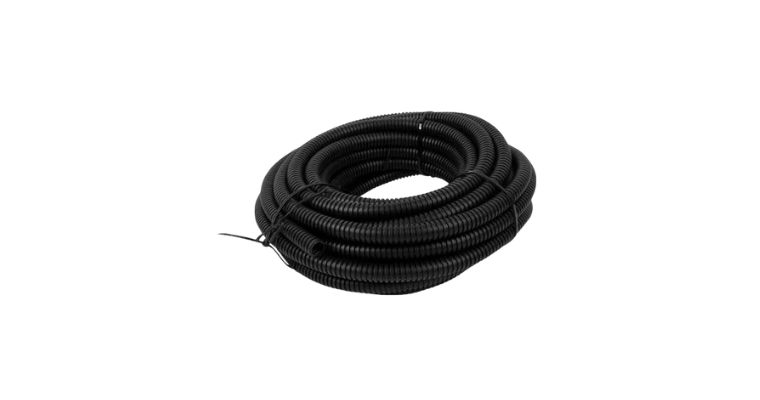
Industrial rubber hoses in South Africa are designed for the management of fluid flow in pressure-rated systems, for the delivery of compressed air with braided reinforcement, and for the management of hydraulic power with a maximum operating pressure of up to 400 bar. The multi-layer design of the industrial rubber hoses includes a synthetic rubber tube, a textile and steel helix reinforcement, and weather-resistant coverings for consistent performance under diverse operating conditions.
The industrial rubber hoses are designed for the support of mining activities in Johannesburg, for the conveyance of slurry in abrasive environments, for the implementation of marine applications in Cape Town without damage from saltwater, for the management of hydrocarbon flow in Durban’s oil and gas industry, for the facilitation of pneumatics in Pretoria’s automotive manufacturing plants, for irrigation in rural agricultural settings, for the management of hydraulic flow in construction machinery, and for food and pharmaceutical products with sanitary standards.
Namrata Rubber Product Pvt. Ltd manufactures to ISO 1436 hydraulic standards and SABS 988 heavy-duty specifications, covering nitrile tubes for petroleum service (-40°C to +100°C) and EPDM covers for coastal UV exposure. Export capability extends to Namibia, Botswana, and Mozambique through FOB Durban dispatch with COO documentation and Incoterms packaging, maintaining 2-4 week lead times for bulk coil lengths.
Field deployments confirm hose assemblies withstand thermal cycling and pressure impulses while maintaining inner tube integrity against conveyed media.
Namrata Rubber Product Pvt. Ltd manufactures hoses using precision extrusion and hand fabrication techniques to ensure accurate compatibility of tube materials, reinforcing materials, and protective coverings to withstand pressure, flexibility, and chemical resistance in various industrial transfer systems.
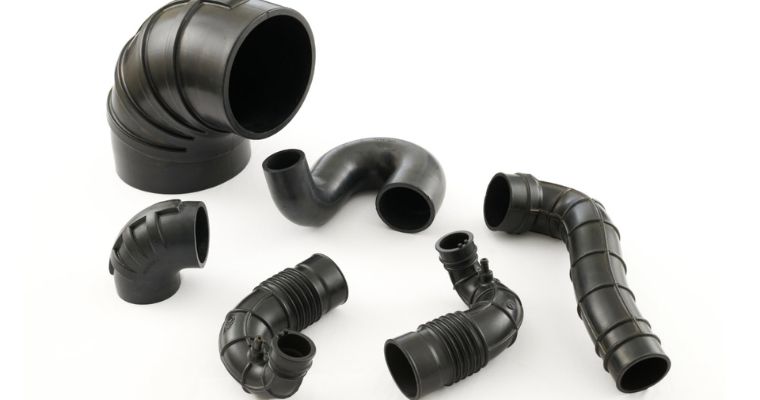
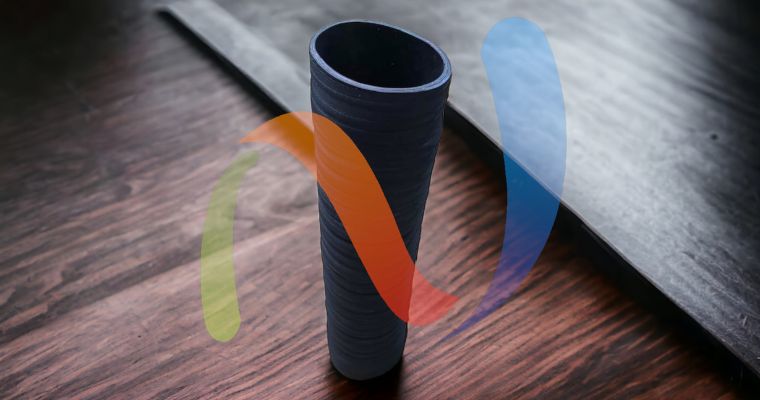
Description: The custom-molded end configurations of the hoses ensure that no field fittings are required, providing a seamless transition from tube to termination.
Applications:
Key Benefits:
South Africa Use Case: In South Africa, the Johannesburg facilities use molded coolant hoses in their CNC machining centers to avoid field crimp failures.
Description: The platinum-cured VMQ tube has a smooth interior for sanitary flow and operates in temperatures from -60°C to +250°C.
Applications:
Key Benefits:
South Africa Use Case: In South Africa, Pretoria laboratories use silicone hoses for bioreactor temperature control systems.
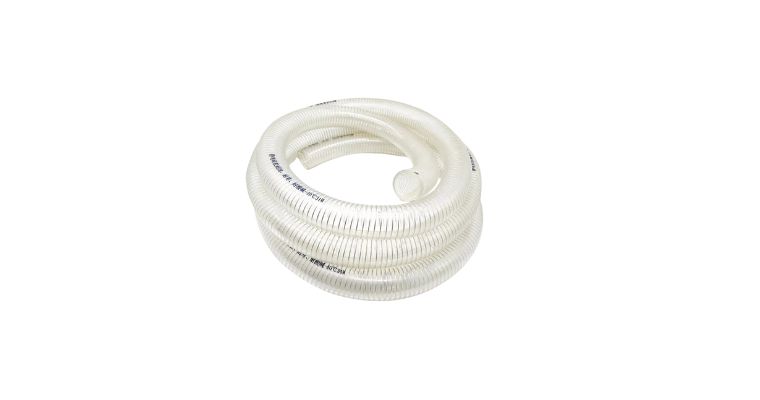
Description: A polyurethane reinforced tube allows for media inspection while still maintaining flexibility and no kinking.
Applications:
Key Benefits:
South Africa Use Case: In the South Africa Use Case, the R&D facilities in Cape Town make use of this hose for monitoring reactions.
Description: CR, a compound, provides oil as well as weather resistance, suitable for marine as well as construction environments.
Applications:
Key Benefits:
South Africa Use Case: In the South Africa Use Case, the neoprene hose is used at Durban shipyards, used in drydock pressure washing systems.
Description: Nitrile rubber hose, a tube, works with petroleum products, reinforced with a textile braided construction rated at 20 bar pressure.
Applications:
Key Benefits:
South Africa Use Case: In South Africa, refineries make use of this hose, used as a pump suction line.
Description: EPDM is resistant to weathering and is commonly used in water and steam systems, offering strong stability against UV and ozone exposure.
Applications:
Key Benefits:
South Africa Use Case: In South Africa, coastal plants utilise EPDM hoses for seawater cooling.
Description: The natural rubber hose provides excellent durability for both air and water transfer while maintaining an extended flex life.
Applications:
Key Benefits:
South Africa Use Case: In South Africa, mining operations rely on natural rubber hoses for compressed air systems.
Description: A stainless-steel helix wire braid provides strength against full vacuum conditions and high-pressure fluid transfer.
Applications:
Key Benefits:
South Africa Use Case: In South Africa, food processing plants use stainless-steel-reinforced hoses for safe product transfer.
Description: The hose uses mild steel reinforcement designed for high-pressure and vacuum service where an economical solution is required.
Applications:
Key Benefits:
South Africa Use Case: In South Africa, mining operations use MS-reinforced hoses in dewatering pump systems.
Description: The tapered bore enables a smooth transition between mismatched connection sizes without requiring additional reducers.
Applications:
Key Benefits:
South Africa Use Case: In South Africa, tanker loading stations commonly use conical hoses for product filling operations.
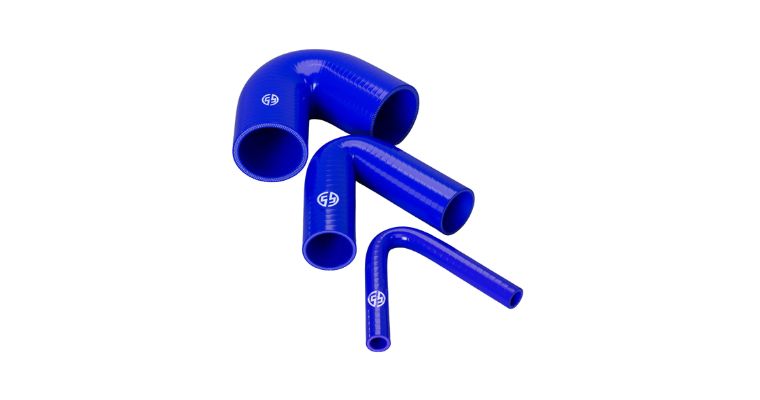
Description: A factory-moulded 45° bend removes the need for on-site hose forming and prevents kinking in tight routing areas.
Applications:
Key Benefits:
South Africa Use Case: In South Africa, 45-degree elbow hoses are widely used in engine compartment installations.
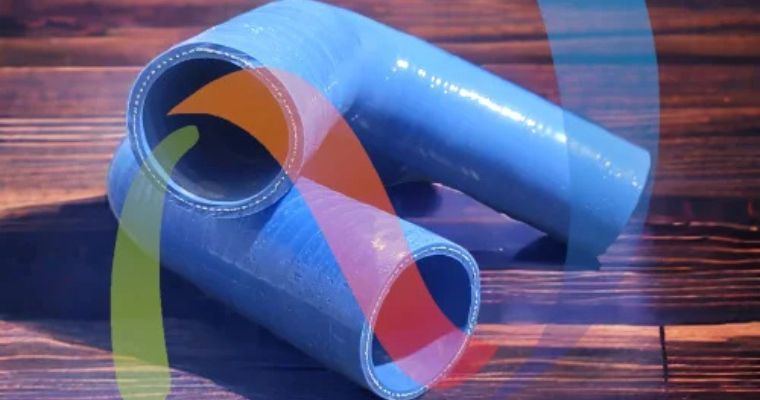
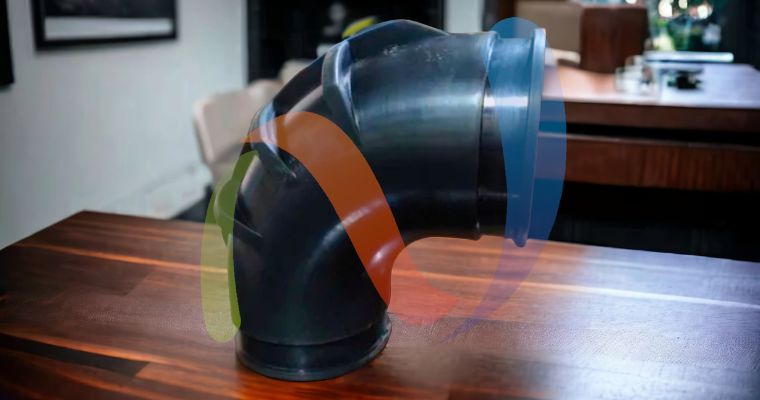
Description: Right-angled elbow rubber hoses are bent hoses used to alter the flow path at a 90-degree angle. These are used in tight spaces to ensure smooth flow of fluids in automotive, industrial, and cooling applications.
Applications:
Key Benefits:
South Africa Use Case: Marine engine installations in South Africa make use of 90° elbows.
Description: The rubber hoses with 135-degree elbows are flexible connecting tubes designed to alter the direction of flow in confined areas. The flexible nature of the rubber hoses ensures the smooth transfer of fluids while maintaining the flexibility required in the system.
Applications:
Key Benefits:
South Africa Use Case: In South Africa, compressor installations make use of 135° elbows.
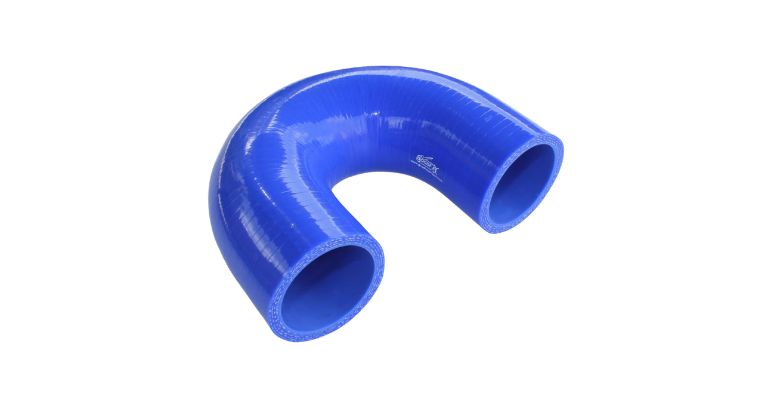
Description: Rubber hoses with a 180-degree elbow are curved connectors that redirect fluid flow in a full U-shape. They are typically employed in confined spaces, where there is a need to ensure smooth flow in automotive, industrial, and piping applications.
Applications:
Key Benefits:
South Africa Use Case: In South Africa, hydraulic test benches are normally installed with 180° return configurations.
Industrial rubber hoses assist in mining activities, marine activities, and manufacturing activities in all major industrial centers in South Africa through a chain of manufacturers, suppliers, distributors, exporters, and dealers.
Abrasion-resistant hoses are used in mining activities for slurry systems and hydraulic systems in mining equipment. Industrial rubber hoses used in mining activities include nitrile-reinforced hoses rated at 20 bar WP for feeding crushers in mining equipment. Suppliers keep large quantities in stock for emergency repairs on drilling rigs in mining activities. Distributors make arrangements for pallets to be delivered to Randfontein for drill rigs in mining activities. Exporters handle export orders for Botswana for mining activities, while dealers offer on-site fitting services for drill rigs in mining activities.
EPDM hoses are used in marine repair yards for cooling water systems in marine equipment and compressed air systems in marine equipment. Custom layflat hoses are manufactured for testing in shipyards in marine activities, while suppliers keep ozone-resistant hoses in stock for shipyards in marine activities. Distributors serve Table Bay chandler firms with their products for marine activities, while export orders for shipyards in Table Bay are handled by exporters for marine activities. Dealers offer on-site fitting services for shipyards in Table Bay in marine activities while in dry dock as part of their maintenance schedule.
Oil transfer hoses for port operations need to comply with SANS 62 requirements. Manufacturers of Type B delivery hoses with conductive wire are available, and suppliers serve fuel depot owners, distributors manage container terminal inventory, exporters serve Mozambique, and dealers provide crimping services for bulk liquid handling equipment.
Automotive plants require hydraulic hoses for manufacturing machinery. Manufacturers of 4-wire spiral hoses with a 400 bar rating are available, and suppliers of R13-rated stock are ready to serve. Distributors provide shipping for Rosslyn factories, exporters assist regional OEMs, and dealers provide crimping station services for maintenance teams.
Chemical transfer hoses are needed for petrochemical plants for maintenance purposes. Manufacturers of PTFE-lined hoses for chemical resistance are ready to serve, suppliers of FEP-covered assemblies are in stock, distributors serve Coega IDZ clients, exporters assist with delivery to Namibia, and dealers provide inspection services.
The transfer of fluids in the various processing industries in South Africa depends on the use of rubber hoses in matching the inner lining of the hose with the properties of the fluids and the use of textile braiding in the control of working pressures ranging from 10 bar to 200 bar.
Nitrile-lined hoses are used in the transfer of hydraulic fluids for drills and conveyor systems in mines, and they are able to withstand slurry abrasion and remain flexible during temperature changes commonly found in deep mining operations.
Nitrile rubber hoses reinforced with wire braiding are used to transfer crude oil and natural gas between storage tanks, while also handling hydrocarbons at coastal terminals under dynamic pressure conditions.
EPDM coolant hoses transfer antifreeze fluids through engine blocks, while PVC air hoses deliver compressed air to robotic welding systems used during automobile manufacturing.
High-temperature silicone hoses direct steam condensate and turbine lubricating oil, providing flexibility during thermal cycling. Fire-resistant variants also meet safety requirements around combustion zones.
Reinforced rubber duct hoses transport conditioned air through commercial buildings. They isolate vibration from rooftop units, while synthetic liners resist ozone degradation from HVAC refrigerants.
PVC and rubber spray hoses deliver pesticides and fertilizers to pivot irrigation systems, while braided pressure hoses power hydraulic rams on combine harvesters during harvesting operations.
Food-grade silicone hoses transfer milk, syrups, and juices between storage tanks and filling equipment. Steam sterilization maintains hygienic conditions without affecting product flavour.
Neoprene submersion hoses deliver fuel to auxiliary generators and hydraulic oil to winches, resisting saltwater exposure while maintaining the bond between the inner liner and reinforcement layers.
PTFE hoses lined with Viton handle aggressive acids and solvents in batch reactors. These hoses provide chemical barrier protection and can withstand working pressures of around 16 bar as well as full vacuum conditions.
Namrata Rubber Product Pvt. Ltd offers customised manufacturing solutions using multi-layer extrusion technology combined with manual assembly to produce rubber hoses up to 12 inches in diameter. Inner liner materials are selected according to the chemical characteristics of the transported fluids, while textile braiding provides pressure resistance ranging from 10 to 250 bar for mining slurry pipelines and chemical transfer systems.
Continuous vulcanisation lines support large-scale production of up to 50,000 meters per month. These systems maintain dimensional accuracy within ±0.5 mm wall thickness and ensure proper cover adhesion through integrated online quality inspection stations supplying refineries in Johannesburg and marine operations in Cape Town.
Export documentation support includes full FOB Mumbai dispatch packages with certificates of origin, fumigation certificates, pressure test verification, and Incoterms-compliant labeling. These documents help meet regulatory requirements for mining operations in Namibia and processing facilities in Botswana within a typical 4–6 week logistics cycle.
Fast-track manufacturing can be completed in about 14 days after specification approval. Final hydrostatic testing is conducted at 1.5 times the working pressure, supported by readily available mandrels and reinforcement materials to accelerate urgent orders for automotive and agricultural sectors.
Quality control procedures verify that each batch meets standards for inner liner adhesion above 95%, uniform fabric saturation, and ozone resistance of the outer cover in accordance with ASTM D1149 Class A50.
Technical consultation services assist engineers with fluid velocity analysis, minimum bend radius calculations, and fitting compatibility checks to extend hose service life under conditions of thermal expansion and pressure fluctuations.
A flexible minimum order quantity system enables Johannesburg manufacturers to evaluate prototypes in small production runs before scaling up to full container-load quantities.
Choose a reliable rubber hose manufacturing partner with proven field performance across South Africa’s demanding industrial processing sectors.
| Material | Temperature Range | Oil Resistance | UV Resistance | Best Application |
| Silicone | -50°C to 250°C | Moderate | High | Electrical & HVAC [ASTM D1418 VMQ] |
| Nitrile | -40°C to 120°C | Excellent | Moderate | Oil & fuel systems [ASTM D2000] |
| EPDM | -40°C to 150°C | Low | Excellent | Outdoor equipment [ASTM D2000 BA] |
| Neoprene | -35°C to 120°C | Good | Good | Marine machinery [ASTM D2000 BC] |
| Natural Rubber | -40°C to 80°C | Low | Moderate | General machinery [ASTM D2000 NA] |
What is the best rubber hose for mining applications in South Africa?
Nitrile rubber hoses with 4:1 safety factor reinforcement handle hydraulic fluid transfer to drill rigs and face shovels, resisting abrasive slurry while maintaining flexibility through underground temperature variations.
Which rubber hose material is best for oil transfer?
Nitrile (NBR) inner tube construction resists petroleum swell (<10% volume change) across gasoline, diesel, and lubricants, standard for tank truck unloading and bulk storage transfer operations.
Do you export rubber hoses to other African countries?
FOB container loading includes test certificates, COO documentation, and anti-collision crating for Namibia copper mines, Botswana processing plants, and Mozambique port facilities within established transit schedules.
What is the lifespan of industrial rubber hoses?
Hoses achieve 2-5 years continuous service under rated conditions, verified through cover hardness retention and adhesion testing after simulated flex impulse cycles.
Can you manufacture custom-sized rubber hoses?
Mandrel-built construction accommodates inside diameters from 13mm to 300mm with custom end configurations and length tolerances ±250mm, matching specific equipment connection geometry.
Are your hoses suitable for high-pressure systems?
Wire braid and spiral reinforced hoses meet working pressures to 420 bar with 4:1 safety factors, hydrostatically proof tested for hydraulic excavators and injection molding machines.
Which hose is best for coastal environments?
Neoprene cover compounds resist salt spray degradation and ozone cracking while EPDM handles UV exposure, extending service intervals in Durban port cranes and Cape Town marine applications.
Bulk pricing support scales with volume for orders exceeding 5,000 meters, reducing unit costs through continuous production runs while maintaining consistent compound quality across nitrile, EPDM, and neoprene constructions. Technical consultation evaluates fluid chemistry compatibility, minimum bend radius requirements, and fitting retention methods to optimize hose service life against thermal expansion and pressure impulses.
Fast delivery across South Africa reaches Johannesburg mining suppliers, Durban refineries, Cape Town shipyards, and Pretoria manufacturers through established courier networks with 2-5 day transit commitments. Export-ready packaging includes FOB container loading, hydrostatic test certificates, COO documentation, and anti-abrasion protection for Namibian and Botswana destinations.

Exercitation ullamco laboris nis aliquip sed conseqrure dolorn repreh deris ptate velit ecepteur duis.